Budapest: one wedding and four funerals
Not everyone in Budapest's hospitality scene is celebrating this autumn. While one of the city's best-known bakeries is preparing for an ambitious new chapter, four restaurants have recently said goodbye, each for a very different reason.
The Wedding: One of Budapest's best-known (and supposedly most expensive) premium bakeries, Vaj, currently operating at three locations across the city, has welcomed new investors, with two of its three founders exiting and co-founder Kristóf Markó retaining a one-third stake. With annual revenue of around HUF 1.9 billion (€4.8 million), the new owners are planning additional locations, new formats and 50% revenue growth in 2027. Not a bad marriage proposal.
Funeral No. 1: Tranzit by Flow - veganism wasn't enough. Housed in a former bus station transformed into a striking hospitality space, Tranzit by Flow had a setting as distinctive as its plant-based menu. But after eight years of building the Flow brand and just 18 months at its latest location, the bistro closed in October. The owners say they simply couldn't build a large enough base of regular customers. A reminder that even a great location and an interesting concept don't necessarily translate into a sustainable business.
Funeral No. 2: Hippeace - the end of the vegetable stew bar. Hungarian food personality Ferenc Szatmári, better known as Főzelékes Feri, closed his tiny Klauzál Square restaurant after three years. The concept revolved around főzelék, Hungary's traditional thick vegetable stews - or, as an American expat once described them to me, "adult baby food”. Szatmári is returning to the media business, leaving behind an interesting question: can a famous food personality turn a very specific everyday dish into a lasting restaurant concept?
Funeral No. 3: Bereg Embassy - trouble with the neighbours. After 11 years, the popular Buda café and bar closed in October. According to its owners, a prolonged dispute with the building's residential community made continuing impossible. Sometimes the biggest threat to a restaurant isn't competition, food costs or a shortage of guests. It's the neighbours upstairs.
Funeral No. 4: Vietnámi Gulyás - a chef's farewell, for now. Chef Krisztián Huszár's distinctive Hungarian-Asian restaurant closed its Frankel Leó Street location. Known for its unconventional fusion of Hungarian flavours and Asian techniques, the restaurant had developed a loyal following. The team has hinted at a possible return, so this may be more of a goodbye to the location than to the concept itself.
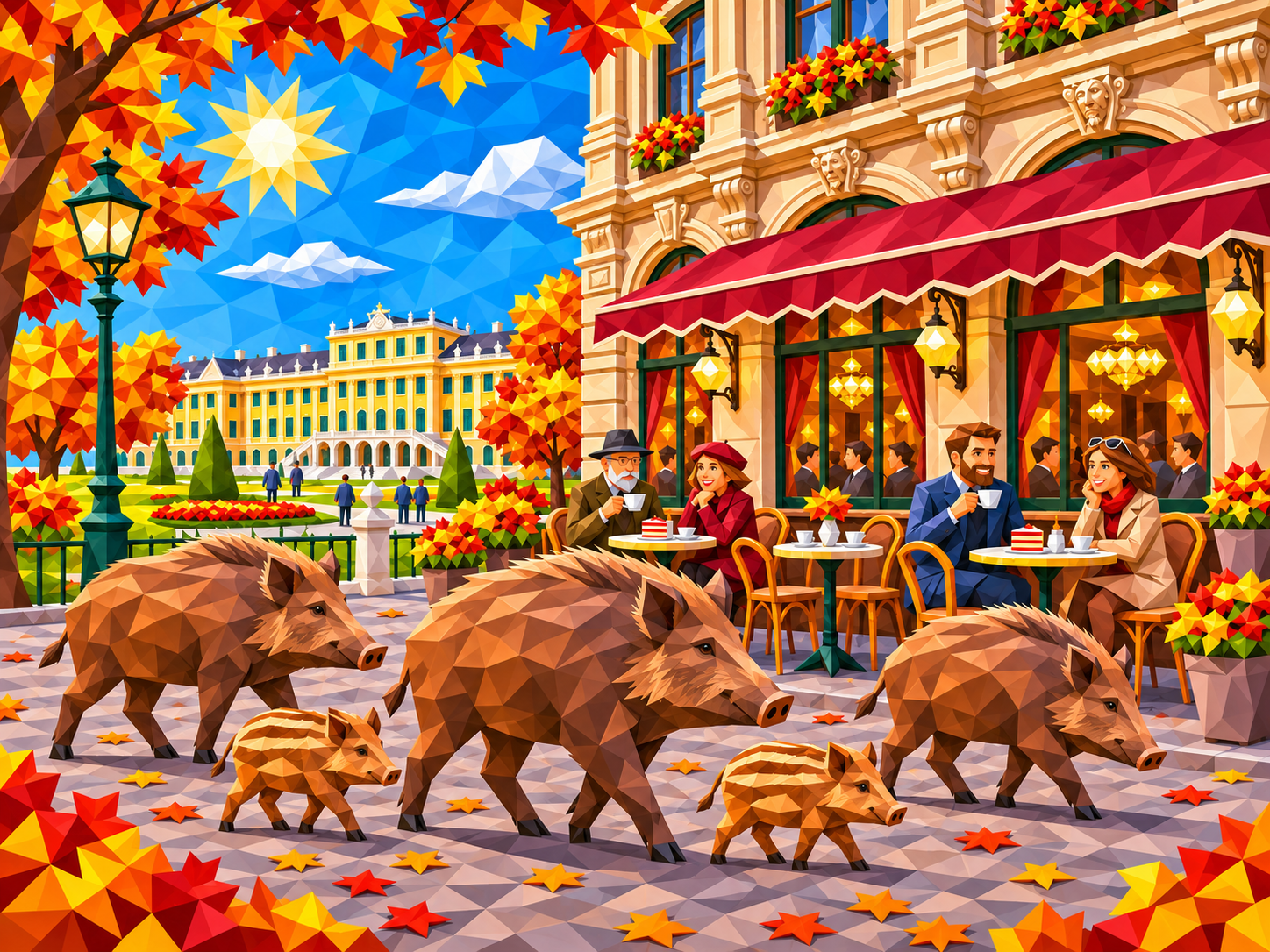
Vienna is now selling its own wild boar
From Vienna, there are two things to report, strangely related (Alexei here). First, a fox trotted past my building the other night, cool as you like. I live in the central 8th district and, while I had seen foxes further out, this was a first so close to home. As I fumbled in my pocket for my phone, the fox was followed by a weasel. He gave me a very casual look. I wonder where they were off to.
The reason I’m telling you this is because since 2022, Vienna has run its municipal food brand, Wiener Gusto – arguably the only European capital to do so. It sells flour, lentils and honey – all made from ingredients grown within the city limits. But it also offers game meat. Obviously, foxes and weasels are spared, but how about venison steaks, anyone?
The range is seasonal, and if you are partial to game, wild boar mince has just come in.
Delivery is currently limited to Austria, and Wiener Gusto products are available at select supermarkets in Vienna. Now of course Vienna is unusually well endowed with open space, with around 50 percent of its territory made up of parks, woods and farmland. But surely other cities have areas suitable for agriculture too. Should they follow Vienna’s lead?
Romania: Three European Gastronomic Regions in the Following Three Years
Harghita, Banat and Dobruja, three regions in Romania, have (or are trying to) become European Gastronomic Regions: Harghita in 2027, Banat in 2028 and Dobruja is a candidate for 2029 and it will find out in the spring of 2027 if it has been accepted.
The distinction is given by the International Institute of Gastronomy, Culture, Arts and Tourism (IGCAT), a Spanish organization, following an evaluation process that assesses both the gastronomic potential of a region (history, touristic relevance, existing food-related ecosystem, from producers to restaurants) and the capacity to work together to develop opportunities for visitors to experience the region from the perspective of local food. While every process is led by an organization (local authorities in the case of Harghita and Banat, a trade association for Dobruja), they only act as catalysts of the process and the evaluation must see that there is a critical mass of involved local actors - from universities to authorities to businesses.
Carmen Ispas, one of the people leading Dobruja’s candidature, says that "As soon as people hear the name of this project, they go straight to «oh, it's about food, it's about festivals, it's about recipes.» It is about food, if you look at it as a vehicle for developing various programs, projects, and long-term strategies." What the regions expect, after being awarded the status, is more tourists, a healthier business environment and, most of all, lasting cooperation.



The line talks back