§ Issues
19
Dispatches filed and counting — for the line, not the lounge.
Bucharest Food Week brought 110 restaurants together, filled tables with first-time guests and sold out a Parisian pop-up in six hours. Here's what the organisers learned.
Bucharest has plenty of good restaurants, but getting people through their doors has become harder lately. Inflation, rising operating costs and cautious consumers have left the city's hospitality industry under pressure. Summer is particularly difficult, when much of Bucharest heads for the seaside.
Alexandra and Cătălin Cincu, a couple well known in Romania's food scene, with 70,000 Instagram followers and nearly 15 years of experience in journalism and digital marketing, decided to give people a reason to come back to the table.
Alongside restaurant reservation platform ialoc.ro and branding agency Studio Maller, they launched Bucharest Food Week, held from 14 to 20 September.
Restaurants would create special menus at three fixed prices: 69, 119 and 189 lei (approximately €14, €24 and €38), while ialoc handled reservations and the organisers took care of promotion. The ambition was to encourage customers to try new places and maybe later return.
They started working on the project in May, a four-people team. They settled for the third week of September (14-20) because school starts the week before and most people would be back in town.
Rather than relying on emails, the organisers approached restaurant owners personally. Alexandra spoke to 60 in just three days. By September, 110 restaurants had signed up, alongside roughly 40 bars, bakeries and other venues offering special dishes or drinks.
The programme grew to include masterclasses, wine tastings, collaborative dinners and a pop-up by Les Enfants du Marché, the cult Parisian restaurant, hosted at Bucharest's Tabra. (Less than a month later, on 12 October, a fire destroyed its permanent home at Paris's historic Marché des Enfants Rouges.)
Fine-dining restaurants Kane and NOUA sold out their allocations on the first day. At Miez bakery, a special meat pie sold out by 11am daily, even after production doubled. For a city whose operators have been complaining about falling spending, those are encouraging numbers.
Alexei wrote the album playing in New York's most talked-about bakery. Here is how that happened, why a Graz bread chain went viral, and what background music legally costs you in Hungary, Romania and Austria.

At Budapest’s Goli, Petra Saás says the daily anxiety about who will turn up has largely gone. An international team, English as the working language and recruitment through expat Facebook groups are central to the story.

The season closed, the people who ran it are between contracts for six weeks, but some already have a start date in Tyrol.
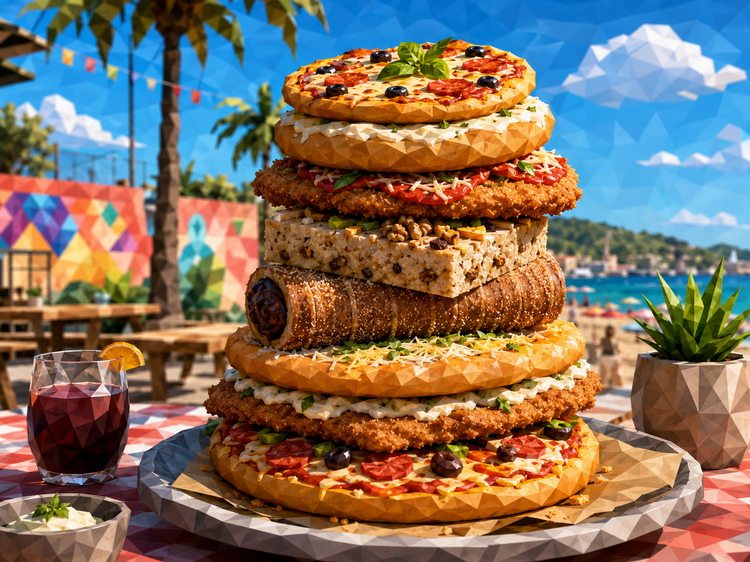
How Central Europe's most sacred dishes became its best marketing assets.
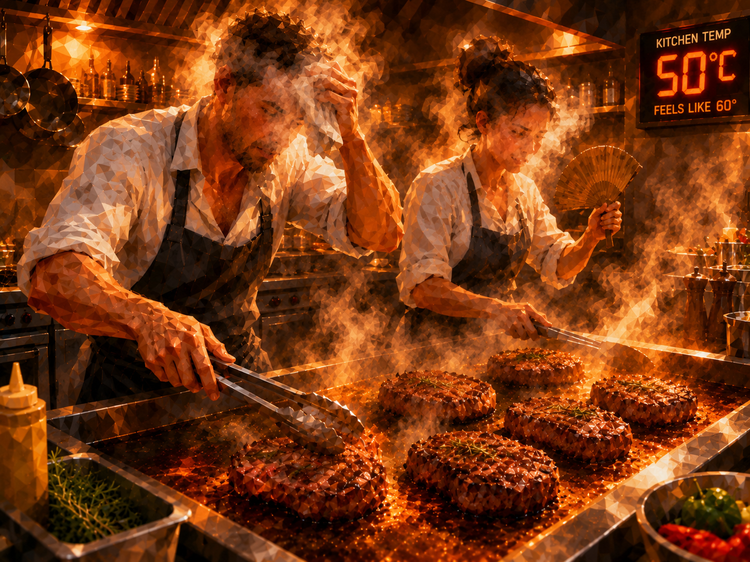
Record heat, flooded basements, carcinogenic sausages, an ice-cream shortage, and kitchen life at 45°C in five reels.
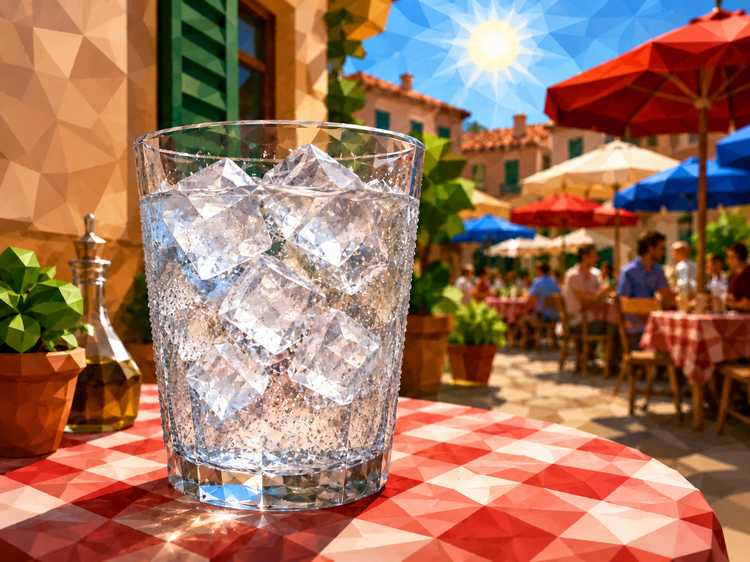
Charging for tap water, or refusing it outright, is a margin decision, a reputation decision and sometimes a legal decision. Across our three markets, these are starting to collide.
Bucharest has plenty of good restaurants, but getting people through their doors has become harder lately. Inflation, rising operating costs and cautious consumers have left the city's hospitality industry under pressure. Summer is particularly difficult, when much of Bucharest heads for the seaside.
Alexandra and Cătălin Cincu, a couple well known in Romania's food scene, with 70,000 Instagram followers and nearly 15 years of experience in journalism and digital marketing, decided to give people a reason to come back to the table.
Alongside restaurant reservation platform ialoc.ro and branding agency Studio Maller, they launched Bucharest Food Week, held from 14 to 20 September.
Restaurants would create special menus at three fixed prices: 69, 119 and 189 lei (approximately €14, €24 and €38), while ialoc handled reservations and the organisers took care of promotion. The ambition was to encourage customers to try new places and maybe later return.
They started working on the project in May, a four-people team. They settled for the third week of September (14-20) because school starts the week before and most people would be back in town.
Rather than relying on emails, the organisers approached restaurant owners personally. Alexandra spoke to 60 in just three days. By September, 110 restaurants had signed up, alongside roughly 40 bars, bakeries and other venues offering special dishes or drinks.
The programme grew to include masterclasses, wine tastings, collaborative dinners and a pop-up by Les Enfants du Marché, the cult Parisian restaurant, hosted at Bucharest's Tabra. (Less than a month later, on 12 October, a fire destroyed its permanent home at Paris's historic Marché des Enfants Rouges.)
Fine-dining restaurants Kane and NOUA sold out their allocations on the first day. At Miez bakery, a special meat pie sold out by 11am daily, even after production doubled. For a city whose operators have been complaining about falling spending, those are encouraging numbers.
Until last month, Martin Auer's organic bakery chain was largely unknown outside Graz, Austria's second-largest city, where it is based and runs most of its branches. These days it is global viral material, because of its new New York outpost, RYE, or rather because of the $60 price tag on its signature rye sourdough.
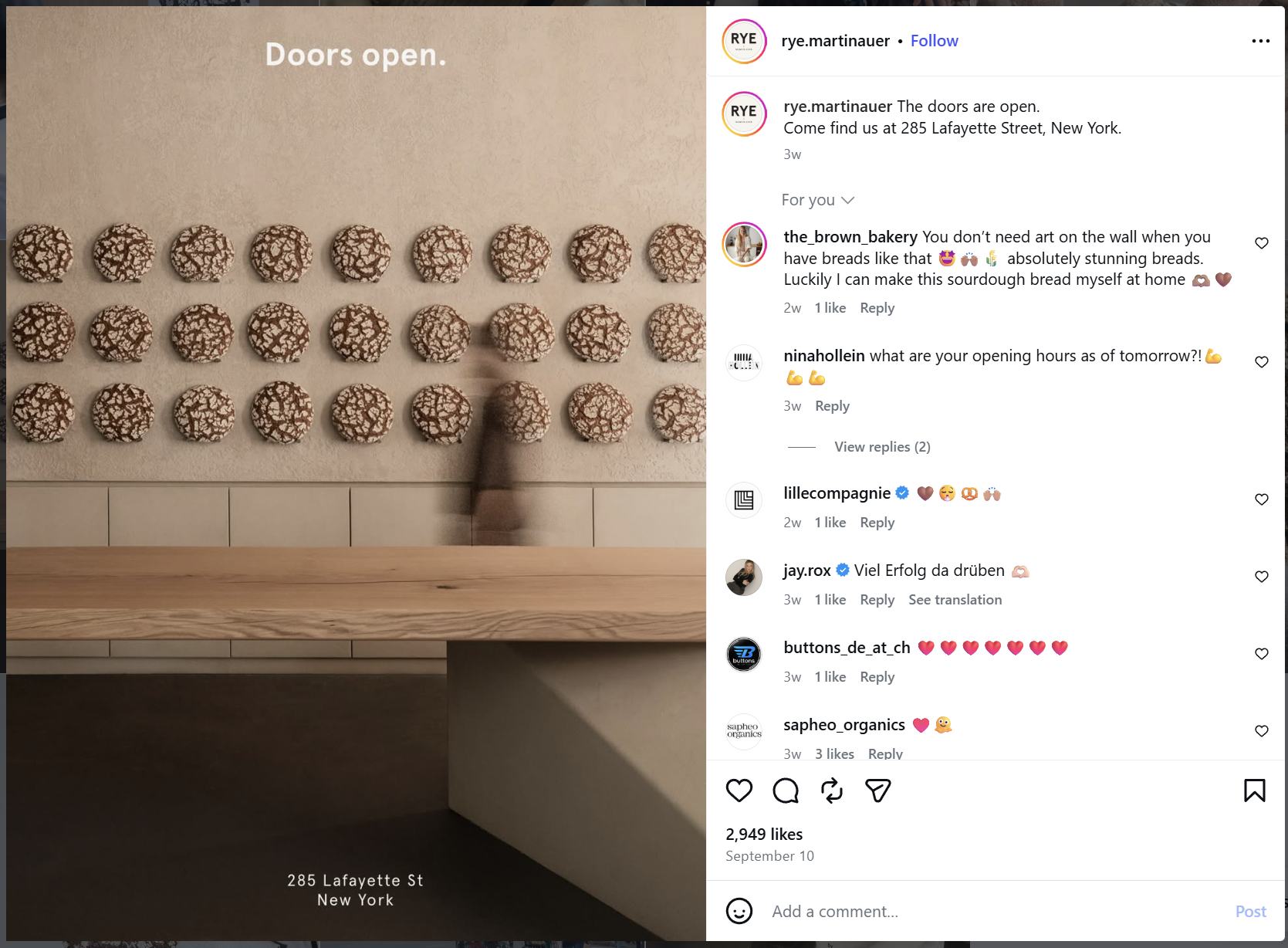
For me (Alexei here), the story began in December 2023, when an email asked whether I'd write copy for the shop. It was going to be not just an upscale bakery but a European concept store: besides bread, there'd be ceramics, loafers and glassware from niche but high-quality producers in Austria, Germany and Spain. My commission was to talk to them all and write it up the way I write for Monocle. One of the producers was GEA Waldviertler, the Austrian shoemaker whose founder, Heinrich Staudinger, once invented his own currency before running, unsuccessfully, for president.
One meeting drifted from texts to the question of what music the shop would play. Martin Auer, who was there, said he would ideally like specially made music playing at all times, Monday to Sunday, just as there were specially made interiors and imagery. Everyone, me included, replied that this wasn't humanly possible in the timeframe: you'd need several bands working nonstop for years, or an extraordinarily prolific composer. Still, I said, I could try. The most I could do was an album of seven or eight songs.
This wasn't entirely spur of the moment. I am a musician. I have been in bands, and have a solo project, Alexei Korolyov & the Single Pieces (the single pieces being the friends who play with me). It also turned out Martin liked much of the same music I do: the Beatles, 1960s rhythm-and-blues, Neil Young. The one reference we agreed on was Young's minimalist, guitar-driven soundtrack for Jim Jarmusch's 1995 Western Dead Man. A bakery with a Jarmusch soundtrack, I thought. How great is that?
The result is not quite as dark, and I am in no way comparing myself to Neil Young. You can listen to the album (for free) on
The idea was a song for each day of the week, plus one extra, just in case. Hence the titles: Wednesday, Why?, Thursday Soon and so on. They play at anchor points through the day, marking the change from morning to midday, midday to afternoon.
So far it seems to be working. There are even people Shazaming the songs, although they may simply be trying to find out who wrote such rubbish. All I can say for myself is that it feels great to be given free licence to create, and to have the result played on repeat in New York, of all places.
A Balaton trader interviewed by G7 last month described his year: work the lake to the end of August, a short break in September, then Austria for the winter. In summer 2024, Hungarian citizens were 11.5% of everyone employed in Austrian accommodation and gastronomy, the largest foreign group in the sector. Romanians were another 3.7% and only 41.3% held an Austrian passport.
So the labour market in the first week of September may not be a whole lot easier than the summer, certainly not for long.
The people who ran the terraces at Balaton or Mamaia are back in Budapest and Bucharest, and a good share already know where they will be in a few months, when the winter season starts. You have six to ten weeks before ski resorts take your options away.
Giggle is a Budapest platform where employers post individual shifts and workers apply for them: 160,000-plus registered users, Romania since last year. We spoke to co-founder Ádám Sebestyén.
Ioana Mihai had a fantasy about her product launch: the head of the Romanian Orthodox Church would publicly condemn it. Free national press, instant notoriety, the perfect stunt. It never happened, nobody protested, but her funeral cake still sold.
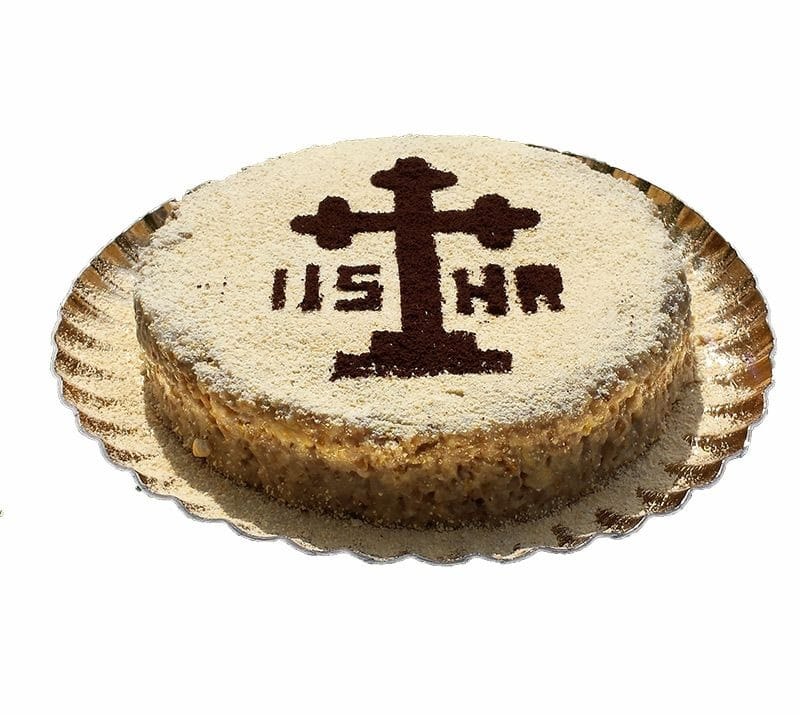
'Colivă' is the dessert that closes funeral and commemoration meals across southern and eastern Romania: boiled wheat berries with sugar, citrus zest, vanilla, rum and a great deal of ground walnut, decorated with an Orthodox cross. To be served, it has to be blessed by a priest. Ioana grew up with it and at eight announced she'd start a colivă business so she could finally eat her fill.
In 2022, aged 32 and working as a marketer, she did. She bet her generation would buy nostalgia and tourists would buy novelty, developed variants with fruit, chocolate, jam, nuts and - for Halloween - black tahini, and launched in 2024 as Mori, colive de viață ("Die! Colivas for living").
Sales have swung between a few hundred and 4,000 units a month but now Carrefour and Freshful have now picked it up for distribution, which completely changes the math.
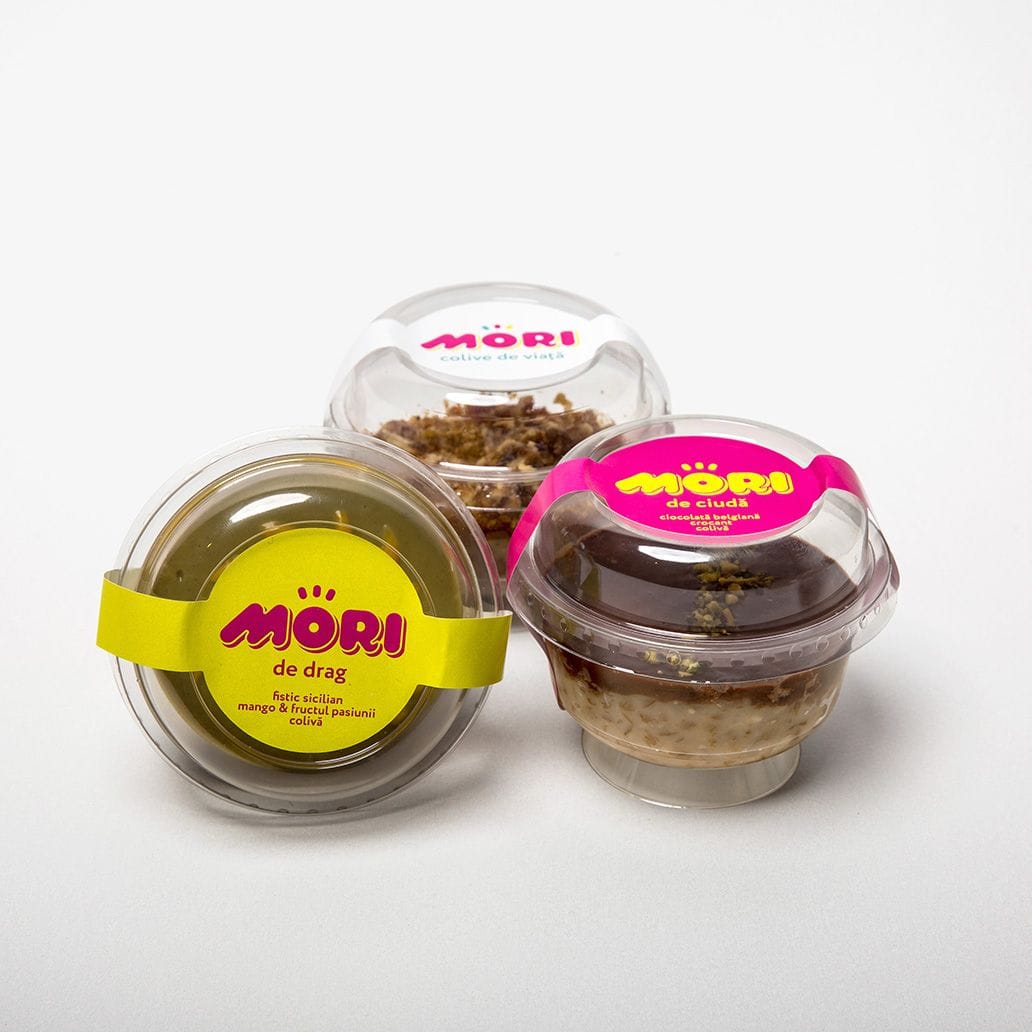
Her explanation of success: it's good colivă. Her grandmother's recipe, traditional enough for the nostalgic, daring enough on the toppings to pull in the curious.
She's not alone.
Once a dish becomes iconic enough in this region, it gets stuffed, wrapped, deep-fried, turned into a burger or a pizza.
Some become bestsellers, others perhaps, should never have happened.
Today, we'll show you both the absurdity and the real economics at play.
Hungary's two most bastardised foods, 'lángos' and 'kürtős kalács' (chimney cake), share a foundation: simple yeast dough. Once people love the base, anything can be built on top.
Welcome to Plancha Express, we have six quick summer stories about the weather, restaurants and hospitality during a heatwave:
Last week, Hungary recorded its hottest day ever: 42°C in the northeast, above 41°C in Budapest, a nationwide heat alert, and water restrictions in several regions. The heat became enough of a public concern that Prime Minister Péter Magyar called on shopping centers, retailers and restaurants to offer drinking water to anyone who needed it.
For operators, the real story starts behind the dining room.
A 38°C day outside translates into 45–50°C inside a kitchen.
At that point heat stops being an inconvenience and becomes an operational risk: staff wellbeing, food quality, service speed, and ultimately profitability.
Governments are starting to treat it that way. According to a Reuters overview, France, Spain, Germany and Italy have introduced or strengthened rules requiring employers to adapt working conditions during heatwaves: extra breaks, adjusted schedules, drinking water, cooling. Hungary has no hospitality-specific heat rules yet, but employers remain responsible for safe working conditions under general labour safety law, and authorities routinely recommend free water, more frequent breaks, reduced physical workload and adequate ventilation.
Operator take: Ask every member of your kitchen team one question: "what makes your station unbearable above 35°C?", the fixes usually cost less than you expect, and better extraction and cooling may return more than your next oven.
A downtown Budapest steakhouse, a hot afternoon in June, a table booked for a birthday. One guest arrives early, sits down, and asks for a glass of tap water. The waiter says, politely, that the house only serves bottled mineral water. The guest doesn't drink bottled water and declines. When the rest of the party arrives, they talk it over for a minute and, birthday or not, leave to eat somewhere else.
The margin on a bottle of mineral water is real, but so is the bill for a table of six that walks out before ordering. How many bottles do you have to sell to cover one reservation that turns around at the threshold?
The liquid itself is effectively free.
But the glass doesn't pour, carry and wash itself.
An illustrative breakdown from the Austrian Economic Chamber's Burgenland branch put the water inside a €1.80 bottle of mineral water at about €0.38, and the tap-water equivalent at €0.001, while staff (€0.52) and overheads (€0.52) were identical in both columns. The figure is old and not a benchmark, but the structure is correct: you aren't selling water, you're selling the labour, glassware, washing, ice and breakage around it. Refusing tap water doesn't protect a product margin, it’s the service you've decided not to give away.
For people who run restaurants, hotels, and hospitality businesses in Central Europe.